Chance Soil Screw Retention Wall
Close
CHAPTER 1.0 Introduction and Applications
1.1.0 - Purpose and Scope
1.2.0 - Soil Nail Technology
1.2.1 - History of Soil Nailing
1.2.2 - Definition
1.2.3 - Screw Anchor Soil Nails
1.2.4 - Grouted Soil Nails
1.2.5 - Comparison with Tieback Walls
1.2.6 - Comparison with MSE Walls
1.3.0 - Soil Nail Application
1.4.0 - Advantages of Soil Nail Walls
1.5.0 - Limitations

1.1 Purpose and Scope

The purpose of this manual is to introduce the concept of soil nailing to civil engineers and to provide guidance on how to design soil nail walls using the A. B. Chance (CHANCE®) Company SOIL SCREW®Retention Wall System. The manual includes:

Chapter 1 - An Overview of Typical Soil Nail Technology and Applications

Chapter 2 - An Overview of Soil Nailing with the SOIL SCREW®Retention Wall System

Chapter 3 - Design Guidelines for Soil Nail Walls using the SOIL SCREW®Retention Wall System

Chapter 4 - Construction and Installation Guidelines

Chapter 5 - Specifications for SOIL SCREW®Retention Wall Systems

Appendix A - Design Charts and Design Example

Appendix B - Example Specifications

Appendix C - Example Drawings

This manual was developed using the design methodology presented in the Federal Highway Administration's "Manual for Design and Construction Monitoring of Soil Nail Walls," Report No. FHWA-SA-96-069, dated November 1996. This manual is intended to be a supplement to the FHWA manual to help users take advantage of the benefits of the SOIL SCREW® Retention Wall System. The final design of any structure requires knowledge specific to the soil properties and structural conditions for a particular site. The design of any soil nail wall is the full and complete responsibility of the designer. A. B. Chance Company and its agents assume no responsibility for the design, construction or performance of soil nail structures, even if the design and construction of the walls were performed using A. B. Chance screw anchors.

1.2 Soil Nail Technology

1.2.1 History of Soil Nailing - Retaining walls using anchored bars date back to the 1960's and earlier. Soil nailing technology can be traced back to the use of the "New Austrian Tunneling Method" (NATM), in which grouted rock bolts and shotcrete were used for supporting tunnels. This technology was reportedly first applied for the permanent support of retaining walls in a cut in soft rock in France in 1961. The use of grouted "soil nails" and driven soil nails, which consist of solid steel bars and steel angle iron, continued to grow in the 1970's, in France and Germany. The first wall built in France using current soil nail techniques was reported to have been built by Soletanche, in Versailles in 1972, using a high density of grouted soil nails in sand. The wall was on a 21-degree batter, was 60 feet tall, had a reinforced concrete facing and supported an excavation for a railroad track.

In North America, soil nails were first introduced for temporary excavation support in Vancouver, B.C., in the late 1960's and early 1970's. The first documented project in the U.S. was in Portland, Oregon for excavation support of a hospital foundation. The maximum excavation depth was 45 feet. The soils consisted of medium dense to dense silty fine sands. The work was reported to have been completed in 50 to 70 percent of the time required for conventional tieback construction and at a 15 percent cost saving.

Two major research programs to study soil nailing were undertaken in the late 1970's in Germany (University of Karlsruhe and Bauer Construction) and in the 1980's in France (Clouterre Program). The French program consisted of a $ 5 million study, jointly funded by the French government and private industry, with the objective of developing a design methodology for soil nail walls. Considering the results of full-scale testing and monitoring of 6 full-scale structures, the "Recommendations of Clouterre," published in 1991, represent the basis for soil nail standards in France.

In 1996 the U.S. Federal Highway Administration published its "Manual for Design and Construction of Soil Nail Walls." This manual synthesizes the work in Germany, France and current U.S. practice, to form a guideline for soil nail design for highway works.

Today in the United States, the major use of soil nail walls is for temporary and permanent support of building excavations. Walls up to 75 feet tall have been successfully constructed. This application for soil nailing continues to grow due to the economic benefits it has over conventional tieback construction. Soil nailing has been used for highway applications dating back to the 1980's. Soil nail walls up to 40 feet tall have been used on Federal highway projects. With the development of the FHWA guidelines and promotion of this technique for highway works, the use of soil nailing will continue to grow.

The purpose of this manual is to further promote the use of soil nails in the United States, specifically utilizing screw anchors. Screw anchors represent an advancement over grouted soil nail technology. The SOIL SCREW®Retention Wall System was developed from screw anchor technology used for tieback walls and foundation anchors. This technology has been used successfully for over 40 years. Some of the advantages of screw anchors for use as soil nails include:

  • Quicker Installation - Screw anchors can be drilled into the ground in a matter of minutes.
  • Immediate Reinforcement - With screw anchors, soil reinforcement is available immediately upon installation. There is no need to wait for grout to cure.
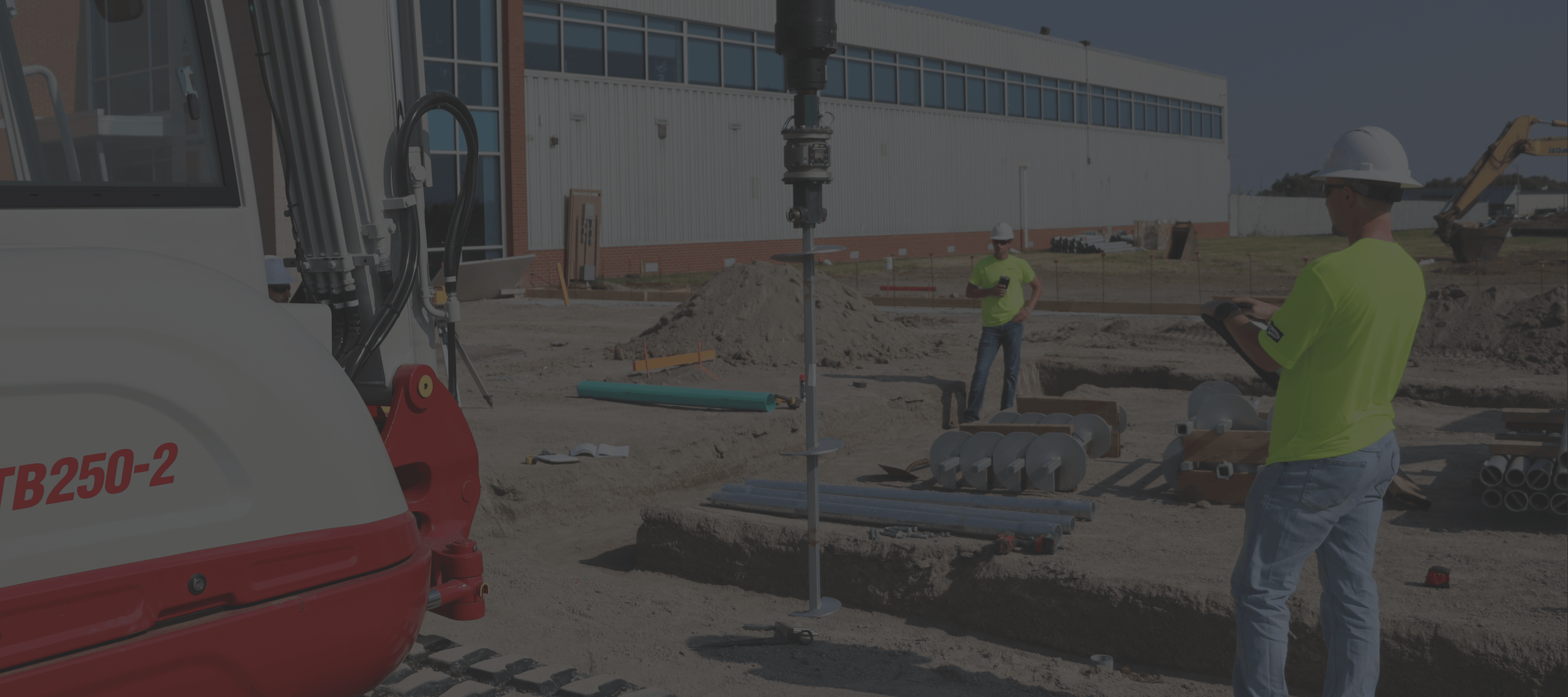
  • No Specialized Equipment Required - Screw anchors can be installed using almost any drill motor with sufficient torque output that can be attached to a backhoe, skid loader or trackhoe.
  • Screw Anchor Capacity Determined During Installation - The capacity of a screw anchor can be estimated directly from the torque required to install the anchor (Hoyt & Clemence, 1989). This provides immediate feedback to determine if design requirements are being met in the field, and eliminates expensive and time-consuming load tests.

With the introduction of the SOIL SCREW® Retention Wall System, soil nailing can be performed without the need for specialized equipment and grouting, and it can be performed quicker and more economically.

1.2.2 Definition - A soil nail wall is a gravity composite soil structure in which an excavated slope or vertical cut is internally reinforced through placement of closely spaced linear reinforcing elements. Reinforcing elements are installed by placing them into the existing soil slope or new excavation. Construction is performed in vertical steps, with construction starting at the top of the excavation and proceeding down (Figure 1.2.1). Once an excavated level is reinforced with soil nails, a permanent or temporary facing is applied to retain the soil. The resulting soil structure has soil nails placed to a depth and of a sufficient density to ensure it can resist the forces imposed by the soil and surcharge loads. The failure modes that are analyzed to insure stability for a soil nail wall include sliding, bearing, and global stability failure modes (Figure 1.2.2 and 1.2.3).

There are two different types of soil nails available, screw anchor soil nails and grouted soil nails. While this manual is written for the design of screw anchor soil nail systems, both types are described below.

1.2.3 Screw Anchor Soil Nails - Screw anchor soil nails are screw anchors which consist of 1.5 inch square solid steel shafts, on which steel bearing plates or helices are welded at regular intervals (Figure 1.2.4). The steel used is a high-strength alloy that is specifically formulated to resist the installation stresses associated with the high torque applied to the anchors during installation. The spacing of the helices is a function of the helix diameter, and is typically about 3.6 times the helix diameter, thus insuring each individual helix acts in bearing without affecting adjacent helices. Screw anchor soil nails screw into the soil and obtain their bond with the soil through the bearing of the helices against the soil.

1.2.4 Grouted Soil Nails - Grouted soil nails typically consist of 0.75 inch to 1.25 inch diameter deformed steel bar that is placed in a drilled hole and grouted in place (Figure 1.2.4). The grouted soil nail hole typically has a minimum diameter of 4 inches. Centralizers are placed around the soil nail to maintain an even thickness of grout around the bar. For permanent applications, nails may be epoxy-coated or provided with a protective sheath for corrosion protection

1.2.5 Comparison with Tieback Walls - Soil nail walls are often confused with tieback walls. However, tieback walls are very different (Figure 1.2.5). A tieback wall is constructed by placing structural facing elements, typically steel soldier beams, vertically, or near vertically, at the face of the wall to be constructed. The facing system is anchored to the earth using very high-strength steel tendons or anchors. The design of a tieback wall requires that the wall facing be structurally stiff enough to retain the earth without excessive deformation. Likewise, the anchors need to be installed deep enough and need to be tensioned to a high enough load to be able to support the facing without creep of the anchors with time. Anchors are spaced as widely apart as the stiffness of the facing will allow. The design also requires that the facing element be embedded a sufficient depth to mobilize the passive resistance of the soil to resist facing movement at the toe of the wall during and after construction. The structural facing is "pre-loaded" when the anchors are tensioned. The length of the tiebacks will vary based on their position in the wall and the wall height.

Soil nail walls are quite different. Soil nails are not tensioned. They are passive soil reinforcements that are placed in sufficient quantities within the soil to create a coherent gravity mass. The soil nails have a lower load requirement than tieback anchors, and are placed closer together, typically on the order of 5 foot on center (i.e., 4 to 8 soil nails typically replace one tieback). The soil nails are normally of a uniform length, with the actual length on the order of 70 to 100 percent of the wall height, depending on the soil strength and surcharge conditions. The objective of soil nailing is to create a reinforced soil mass that has sufficient internal stability and size so that it can provide sufficient safety factors against movement due to sliding, bearing failure or global instability. The objective of the facing is to retain soil and to provide enough structural capacity to insure that the nail head will not shear through the facing and that the facing will not fail in flexure between nails.

1.2.6 Comparison with MSE Walls - The design of soil nail walls is often compared to the design procedures for Mechanically Stabilized Earth Walls (MSE Walls). While the mechanics for designing MSE Walls are quite similar to soil nail walls, the way in which the reinforcements are tensioned and the location of deformations within the wall are quite different. MSE walls utilize a high density of soil reinforcements. Reinforcements are placed within a controlled compacted granular fill and are attached to a concrete facing panel to retain the soil. In an MSE wall, the reinforcements are passive soil reinforcements with lengths typically varying from 70 to 100 percent of the wall height, depending upon soil strength and loading conditions. The density is somewhat greater than soil nails (i.e., steel strip soil reinforcements used for MSE walls are typically placed on 2.5-foot centers). The strength of steel strip reinforcement is approximately 25% of the strength of a typical soil nail. Both an MSE wall and a soil nail wall require a certain amount of movement to mobilize the strength of the reinforcements. In an MSE wall, reinforcement strength is mobilized by compression of the fill. The stress continues to increase on the reinforcements in the lowest portion of the wall as each additional soil lift is compacted. This places the greatest stress on the lower reinforcement strips, and results in a tendency for deformation, if it occurs, to be observed in the lower third of the wall (Figure 1.2.6). Since a soil nail wall is built from the top down, the first row of nails will exhibit the greatest stress. As soil is excavated at the wall face, the strength of the upper nail is mobilized as a result of the decompression or reduction in confinement of the soil (Figure 1.2.7). For soil nail walls, mobilization of tension in the reinforcements is greatest at the top of the wall initially, and increased tension occurs during excavation of subsequent soil layers. Soil nails must be placed deep enough and at a great enough density to resist these stresses and the resulting deformation during and after construction. Often times the upper row of nails will be placed deeper than the lower row of nails and be pre-tensioned or be placed in combination with a tieback to control facing deformation (Figure 1.2.8). Immediately after construction, the lowest row of nails will have the least amount of tension. However, the tension within the lower row of nails ultimately increases to an equilibrium state over time as stress is transferred from the soil to the reinforcements. Despite the differences in how tension is developed in the reinforcements, the lines of maximum tension in soil nail walls and MSE walls are very similar. Therefore, the reinforcement densities and lengths will be similar.

1.3 Soil Nail Applications

Soil nail walls have been found to be an economical solution to many soil reinforcement and excavation support problems. The following section lists some of the typical applications for soil nail walls and some of their benefits.

  • Alternative to Tieback Wall for Temporary or Permanent Excavation Support
    - Eliminates the time and expense of placing H-piles.
    - Eliminates labor associated with placing timber lagging or sheet piling.
    - Eliminates the need for expensive structural facing systems.
    - By placing a structural face on a soil nail wall, it can be used as the permanent foundation wall, saving the time and money associated with an additional construction step.
    - Decreases right-of-way requirements, since the length required for soil nails is shorter than that for tiebacks.

  • Alternative to Cast in Place Walls (CIP) in Cuts
    Cast-in-place walls in cuts will require temporary shoring and over excavation to be able to install wall footings. A soil nail wall requires no shoring and can use a smaller footing (Figure 1.3.1).
  • Repair and Reconstruction of Existing Retaining Wall Systems
    Replacement and reconstruction of a failed timber or concrete crib wall, MSE wall, gabion wall, or CIP wall is very expensive. An alternative is to reinforce the failed wall with soil nails and replace or repair the facing. This eliminates a very expensive construction step of excavating the failed wall, especially if the wall is supporting another structure (Figure 1.3.2).
  • Roadway Widening under Existing Bridges
    Soil nail walls can eliminate construction steps associated with temporary and permanent walls needed for widening roadways adjacent to existing highway bridges. Soil nail walls can be combined with permanent facings, thus providing a permanent wall for support of bridge fills without the need for temporary shoring by using top down construction sequence (Figure 1.3.3).
  • Landslide Remediation
    Soil nail walls can be used to reinforce failed slopes and walls in-situ. Soil nails must be drilled beyond the failure surface to a depth great enough to mobilize the nail tensile strength. This analysis is similar to the design of a reinforced fill slope, however, soil nails enable this remediation to be performed in-situ without removal and replacement (Figure 1.3.4).

1.4 Advantages of Soil Nail Walls

Soil nailing provides many of the same benefits as tieback walls. Some of the key advantages of soil nailing are:

  • Lower cost, quicker construction process and less impact on adjacent properties when compared to over excavation and construction of a conventional retaining wall.

Compared to Tieback Walls the advantages of Soil Nailing include:

  • Elimination of the need for a high-capacity structural facing (H-Piles, walers or thick CIP facings). In many cases, this lowers cost and construction time.
  • Smaller reinforcing elements can be installed with smaller equipment. There is no need for large equipment to drill or drive H-piles, thus allowing more flexibility, even in areas with overhead obstructions.
  • Reduced right-of-way requirements, since soil nails are shorter than tiebacks.
  • Reduced construction time, since H-piles are not required, and soil nails do not require post-tensioning.

Screw anchor soil nails provide the following advantages over grouted soil nails:

  • Reduced manpower, since the steps of nail installation in the drill hole and grouting are eliminated.
  • Reduced equipment requirements, since screw anchors can be installed using simpler, less expensive equipment (i.e., backhoe or trackhoe), and no grouting equipment is needed.
  • Reduced construction time since installation is quicker, construction steps are eliminated and screw anchors provide required capacity immediately upon installation.
  • No spoils, cleaner jobsite.

1.5 Limitations

Soil nailing, along with other in-situ reinforcement techniques, share the following limitations:

  • Permanent underground easements may be required.
  • Reinforcements may interfere with existing or future utilities.
  • Use of soil nails in soft, cohesive soils subject to creep may not be economical, even at low load levels
  • Horizontal displacements may be greater than those associated with tieback construction, and therefore, may limit use adjacent to critical structures.
  • Shotcrete facings on permanent walls require special drainage considerations to eliminate the potential for freeze-thaw damage, particularly in frost heave susceptible soils such as silts and fine sands.

Limitations specific to soil nailing construction are:

  • For near vertical walls, the soil being nailed must be able to stand unsupported to a height of 3 to 6 feet while it is being nailed and covered with shoring or shotcrete. Alternatively, a construction sequence using slotted cuts, nailing and berming may work, but will add to the cost. Soil without a short-term cohesion, such as loose to medium clean sands and gravels, may not be well suited for soil nailing.
  • The groundwater table should be lowered below the bottom of the wall during and after construction. Seepage through the face will soften soils, resulting in local instability or slumping during construction, and reduce the bond between the soil and the shotcrete face. In the long term, the build-up of pore pressure behind the wall and the potential for frost heaving need to be controlled through the placement of permanent drains behind and below the wall face.
  • Soil nailing in very low shear strength soil may require a very high soil nail density, and thus be uneconomical.
  • Soil nailing in sensitive soils and expansive soils for permanent long-term applications is not recommended. For temporary wall applications in these soils, the potential for loss of shear strength or swelling and heave due to moisture or loadings must be considered.

Revised 4/99

top_butt

content button

chp1 butt chp3 butt chp5 butt app a butt
chp2 butt chp4 butt chp6 butt app b butt